How many terminals and gates does Kutaisi Airport have?
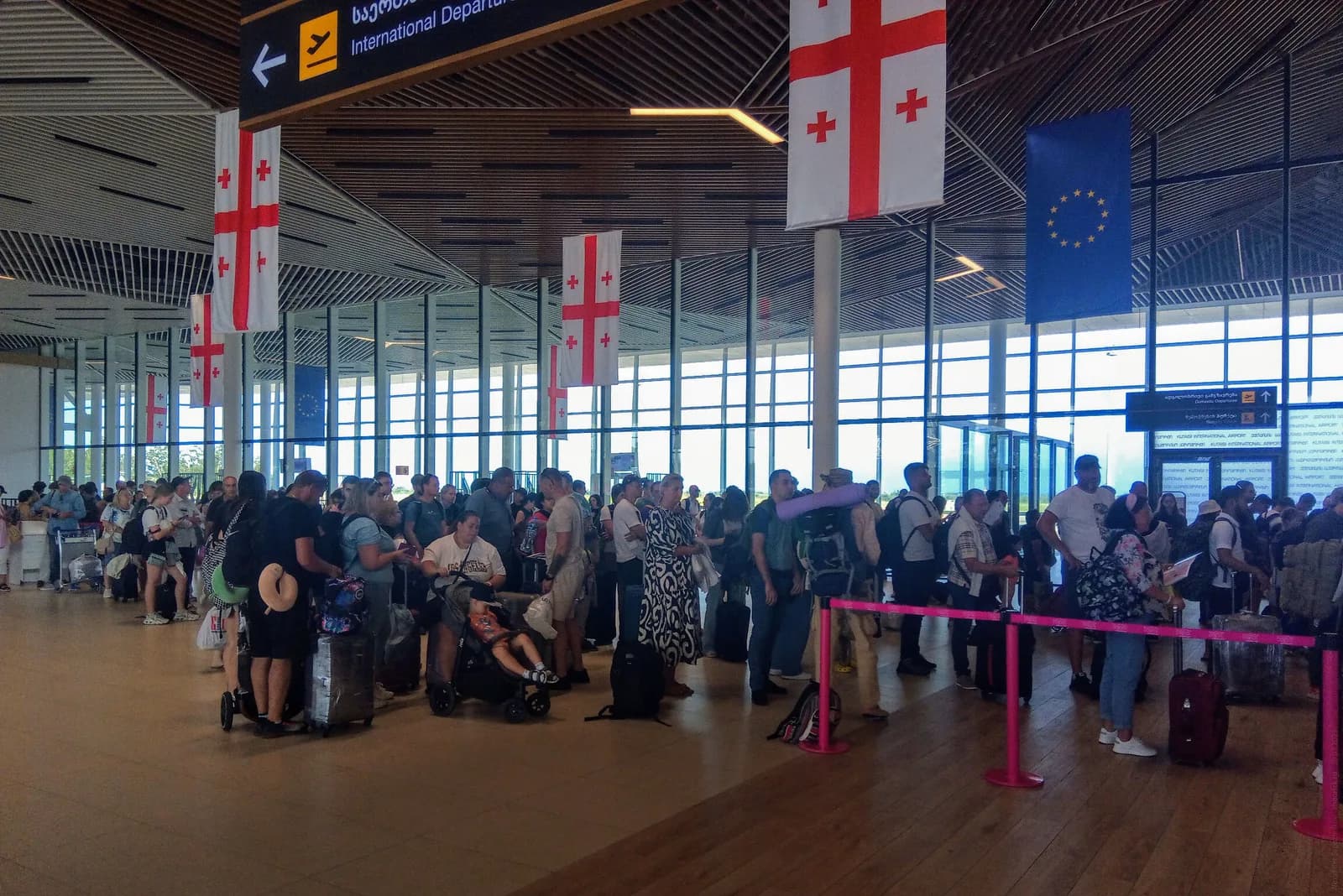
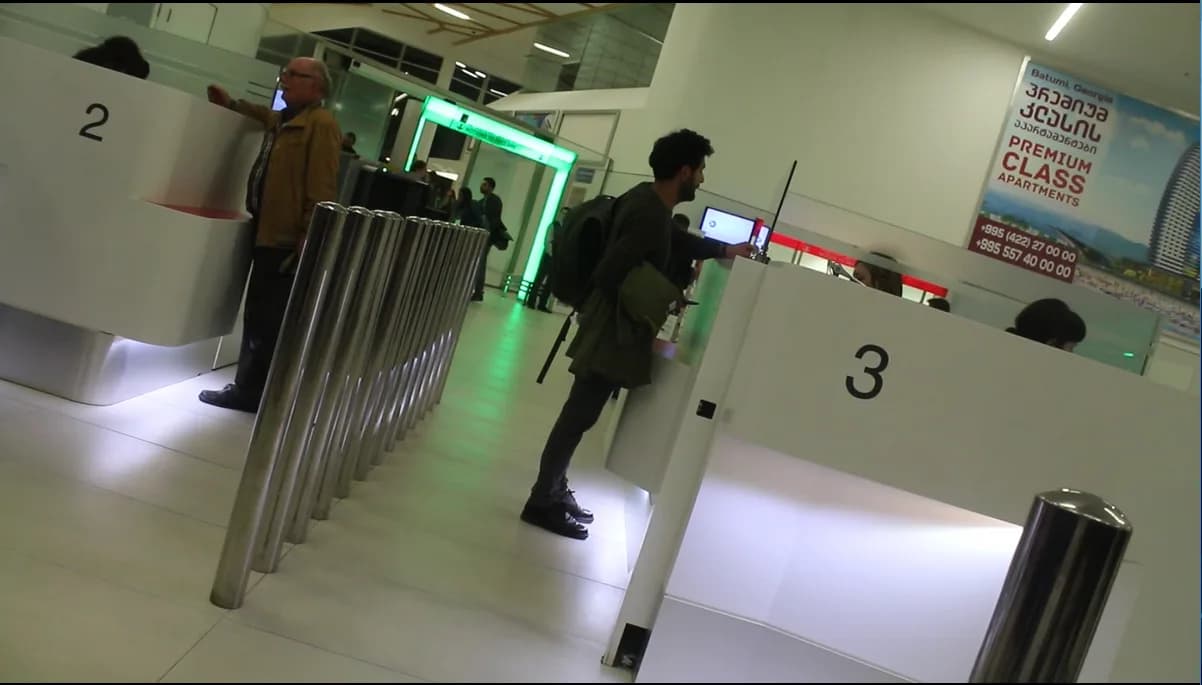
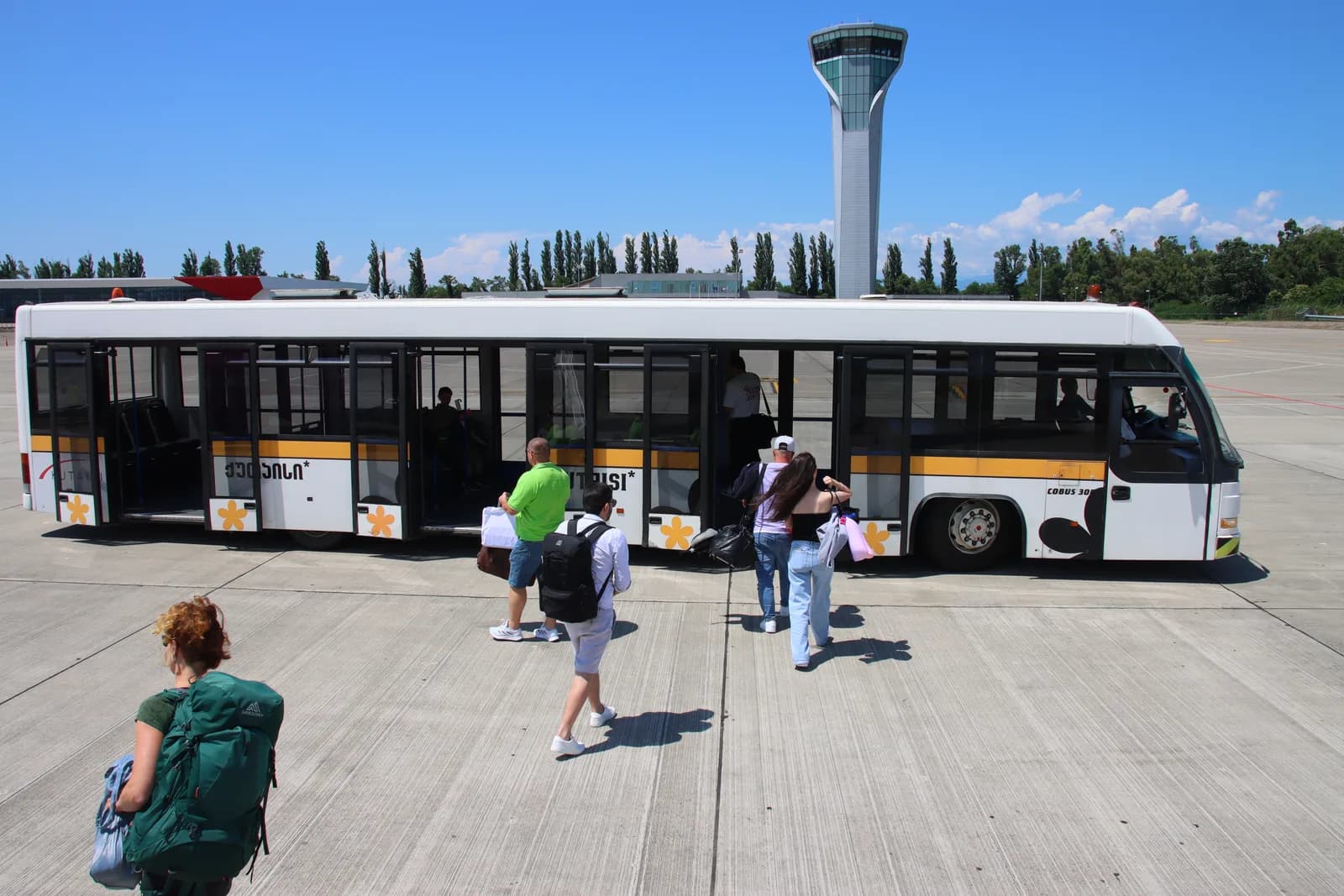
One terminal, one concourse, seven gates. The airport's own figures give 7 gates and 9 aircraft stands, served by a single 2,500-metre runway. There is no second terminal, no separate wing and no people-mover, and nothing to navigate between domestic and international flights. Georgia sits outside the Schengen area, so there is no Schengen/non-Schengen divide inside the building either. Whichever flight you are on, you check in, clear security and passport control, and wait in the same concourse as everyone else.
Who designed the terminal, and why is the ceiling that shape?
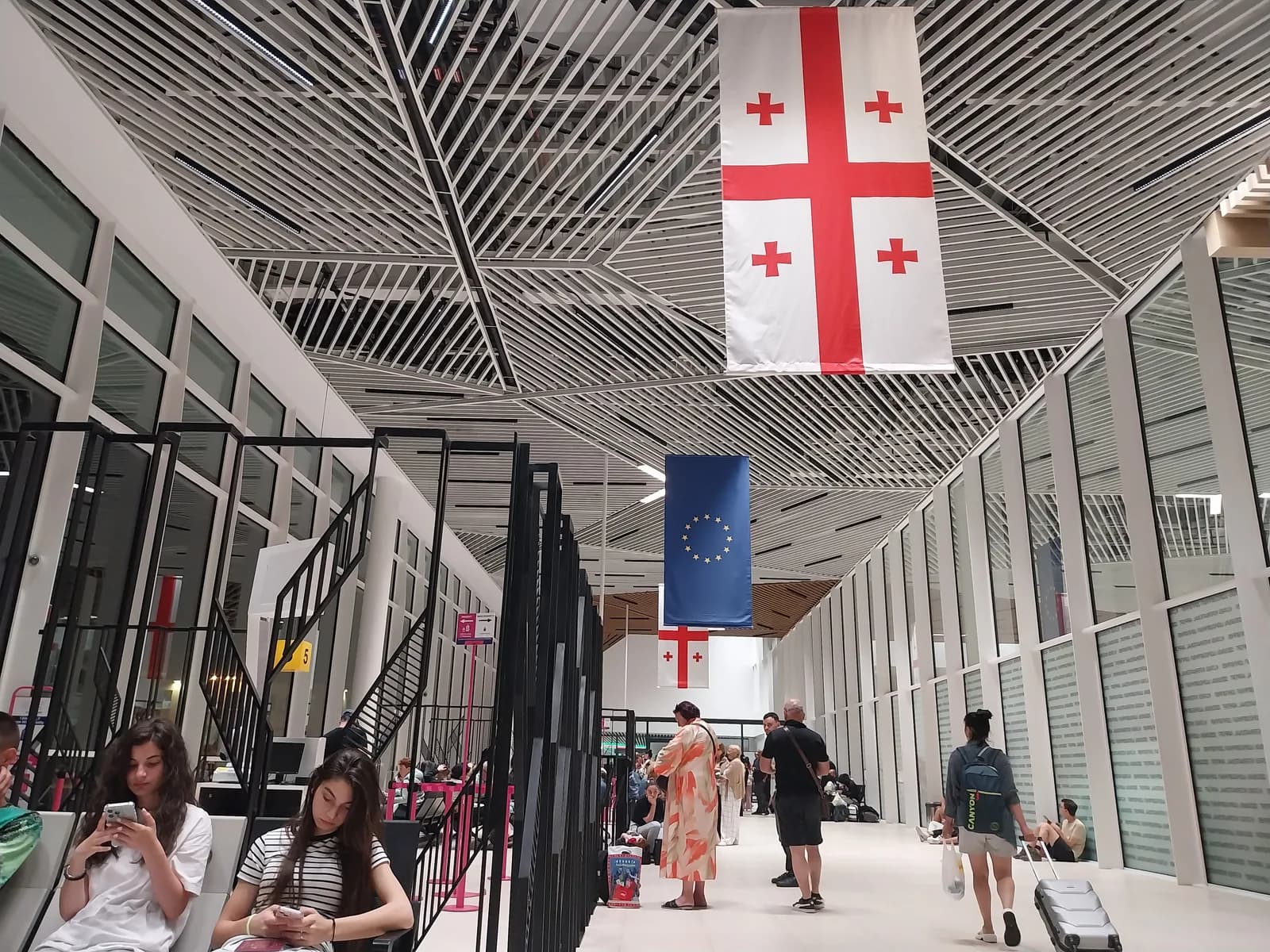
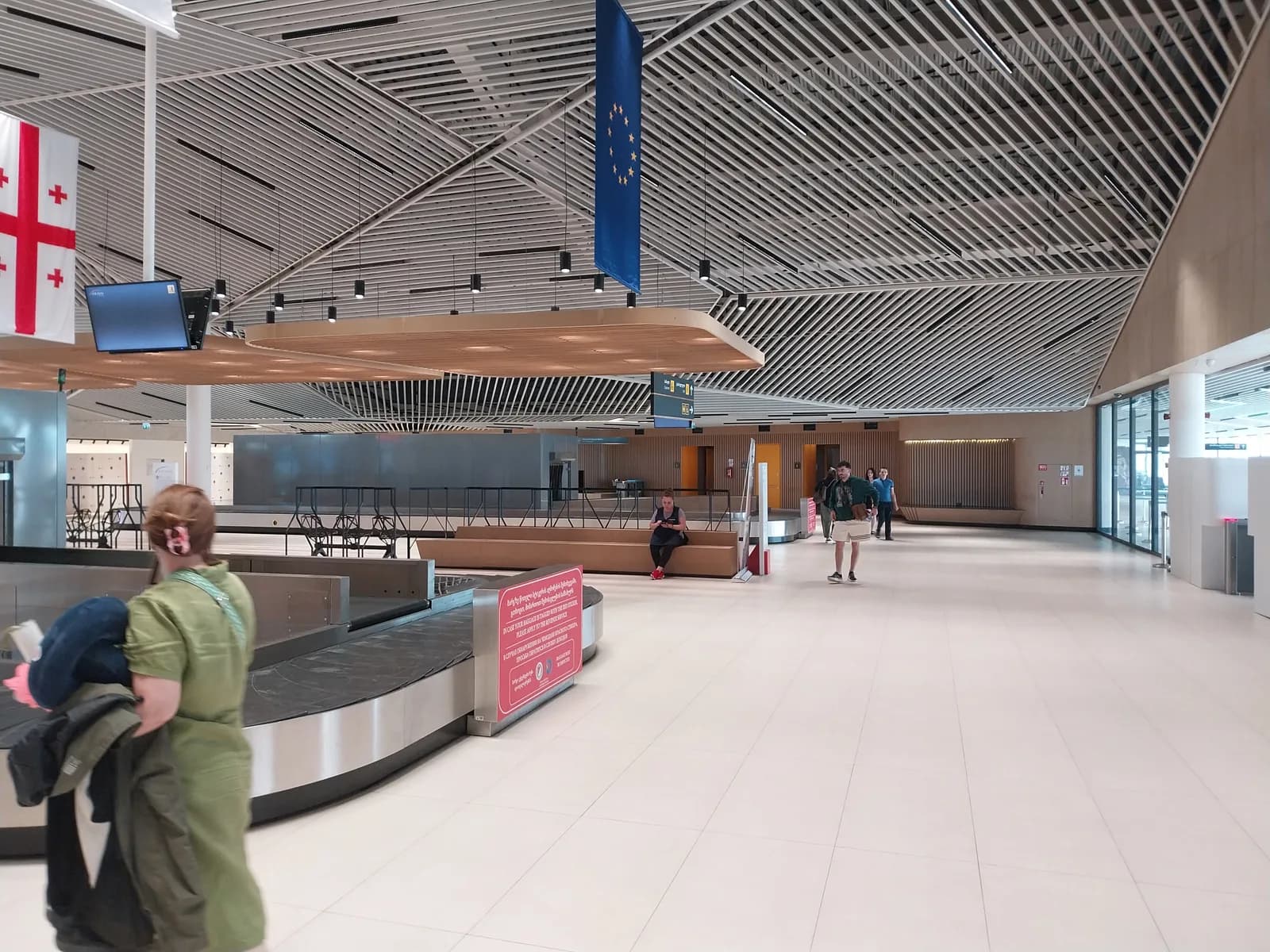
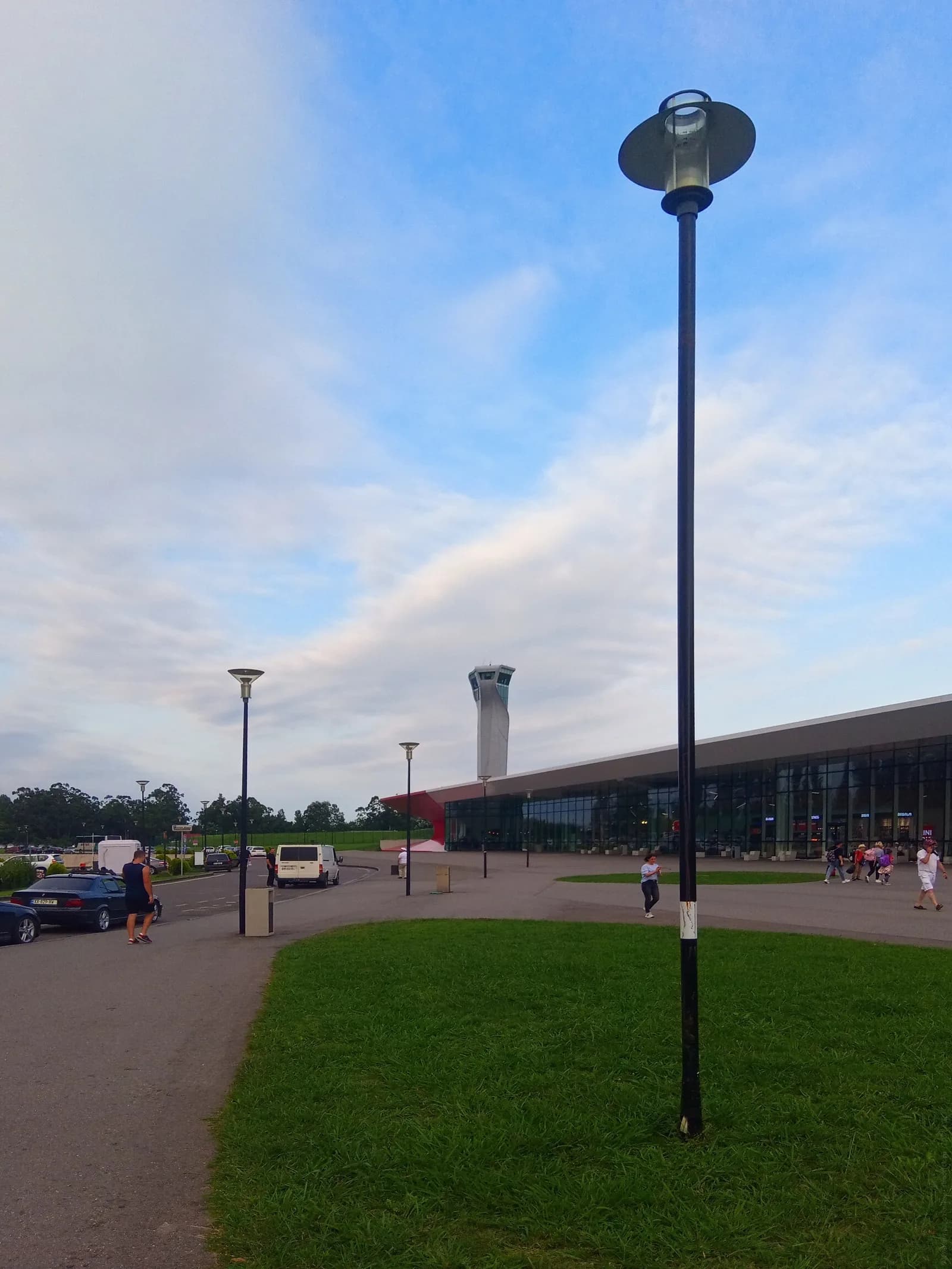
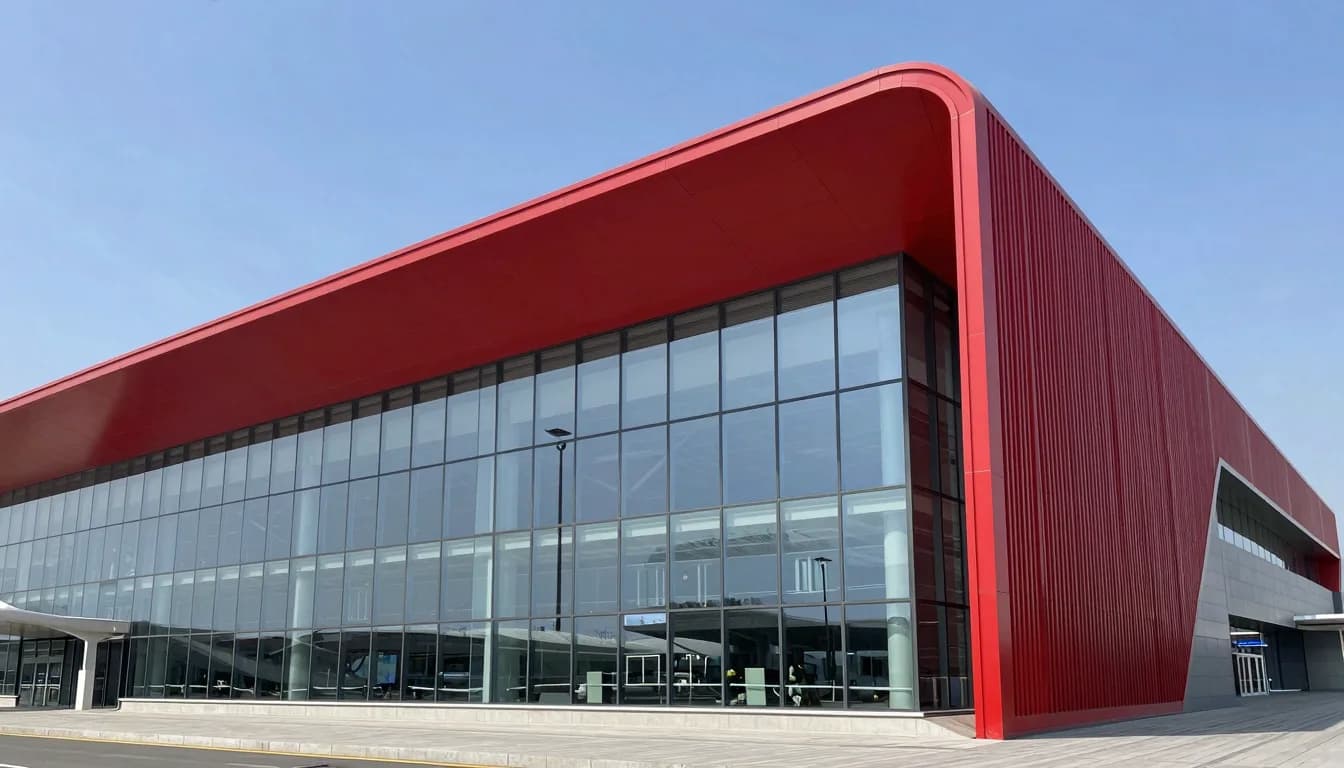
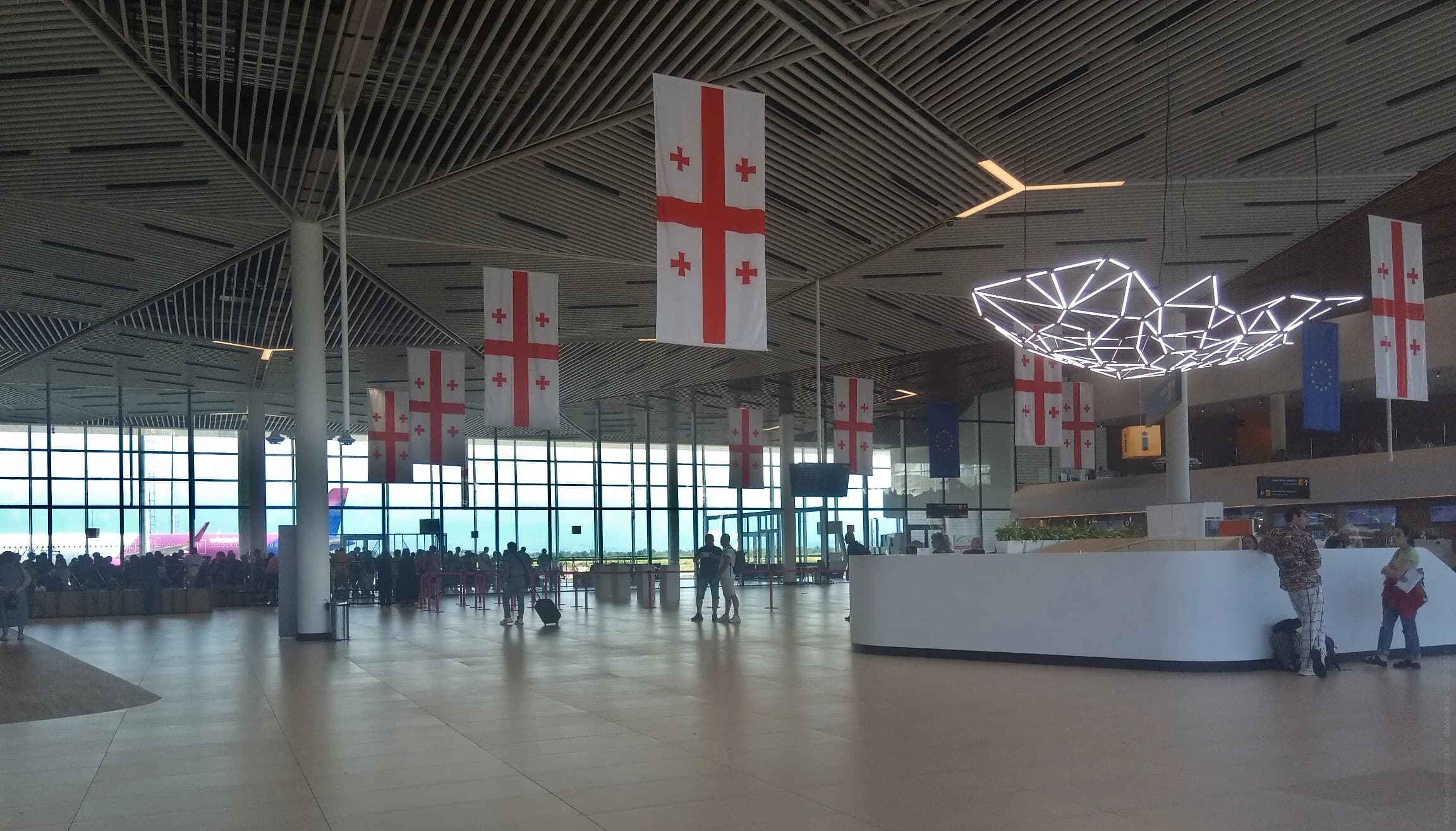
The Dutch firm UNStudio. The umbrella structure overhead is not decoration: it exists to organise passenger flows, keeping departing and arriving passengers from crossing paths, while framing views of the Caucasus Mountains through a large-span glass volume. A red corner detail marks the entrance. Published sizes differ depending on what is counted — UNStudio gives the building surface as 18,300 m², while Georgian reporting at the 2021 reopening described a terminal grown to 30,000 m².
How many check-in desks are there?
Eighteen. The 2021 upgrade raised them from 10 and lifted the terminal to a stated 1,200 passengers an hour. That capacity matters most in the early morning, when several Wizz Air departures leave close together and the check-in queue is the longest thing between the front door and the gate.
What is actually inside the terminal?
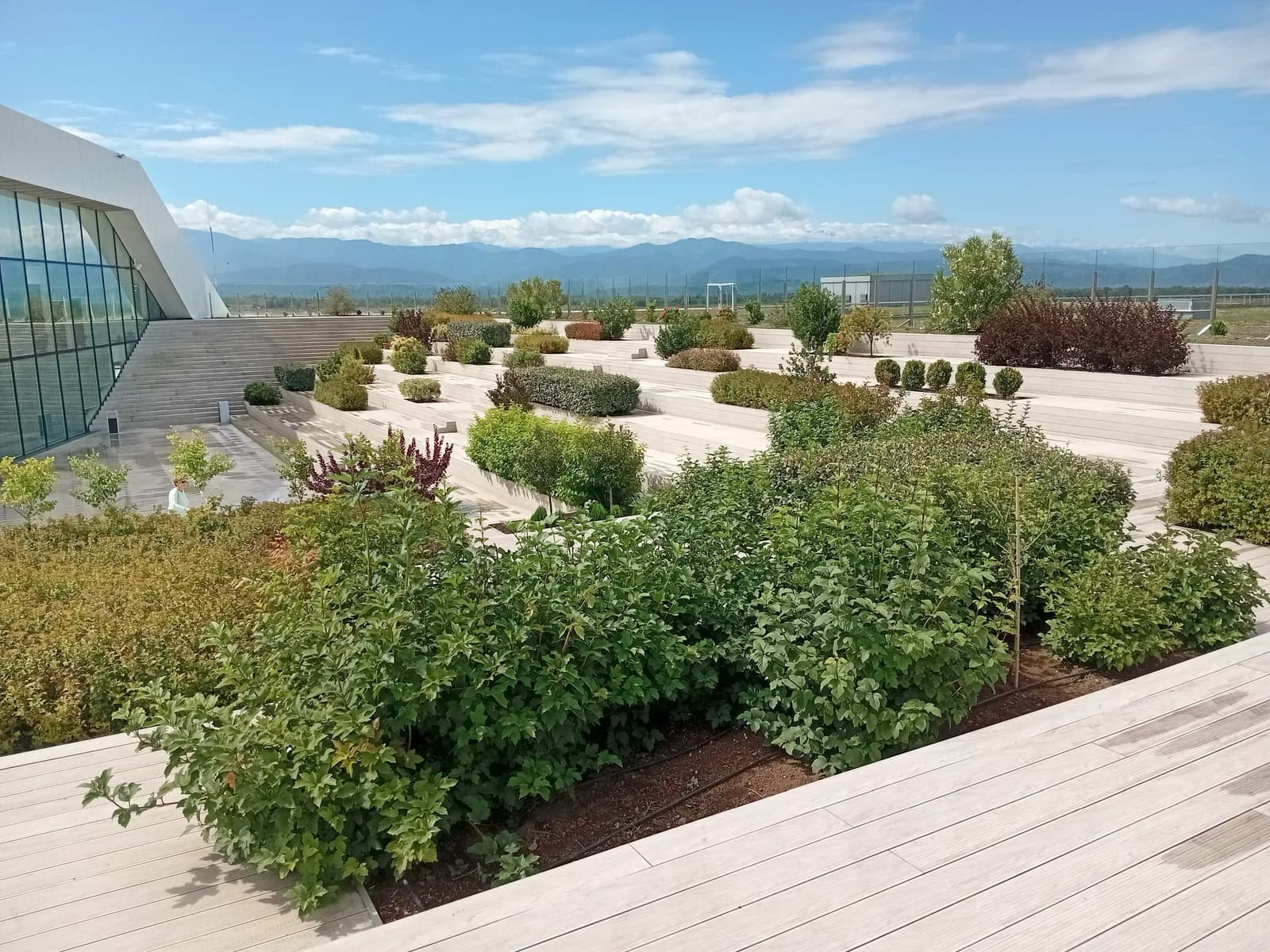
Less than the building's footprint suggests. There is one duty-free shop and two coffee shops. Currency exchange and car-rental counters sit in the arrivals hall, and Wi-Fi is free and unlimited throughout. The original UNStudio brief also included a CIP lounge and an exterior garden on the departures side. It is a terminal you pass through rather than one you can spend a day in — if you need a proper meal, plan it for either side of the flight.
How busy does it get?
Kutaisi handled 1,722,809 passengers in 2024 and 1,671,198 in 2023, against a stated capacity of 2.5 million a year — roughly two thirds of what the rebuilt terminal was designed to absorb. The growth behind those numbers is recent and steep: 873,616 passengers in 2019, and 187,939 as late as 2013. A building that looked oversized when it opened does not any more.
Is it easy to find your way around?
Yes, and that is the practical payoff of the layout. With seven gates off a single concourse, orientation is not a real problem — the walk from check-in to the gate is short and straight, and you are unlikely to need signage to rescue you. Arrivals is one hall: baggage, then the exit, with the transport ranks immediately outside the doors.
Anything unusual about the building itself?
An underground water source on the site feeds a concrete core activation system that heats and cools the terminal, with grey-water collection built into the floor. None of it is visible from the concourse, which is rather the point — the sustainability work sits in the structure instead of on display.
When was the terminal built, and what changed in 2021?
The airport closed for reconstruction in November 2011 and reopened on 27 September 2012 with the UNStudio terminal. A second phase opened in June 2021, and that is where the 18 check-in desks and the 1,200-passengers-an-hour figure come from; before it, the airport's stated annual capacity was 600,000.
Where these figures come from
Gate and aircraft-stand counts: kutaisi.aero, the airport's own site.
Terminal design, the umbrella structure and the 18,300 m² building surface: UNStudio, the architects.
Check-in desks, 1,200 passengers an hour and the 2.5 million annual capacity: Georgian reporting on the June 2021 reopening.
Runway, reconstruction dates and annual passenger totals: the Kutaisi International Airport article on Wikipedia.
Checked August 2026. Re-verify anything time-sensitive before relying on it.